

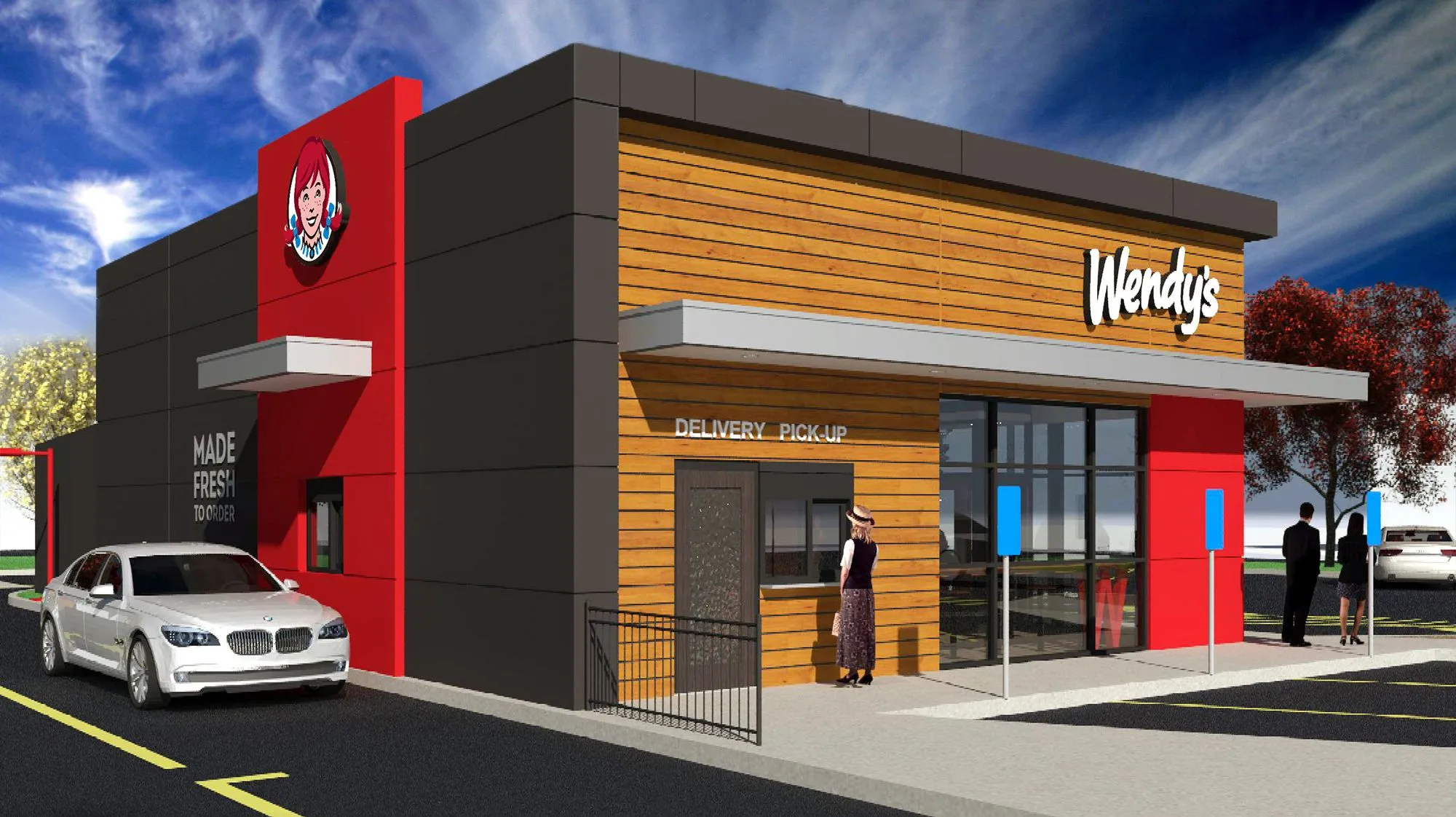
Designing around the phone, not the counter
For most of quick service history the counter was the centre of the restaurant. Digital ordering has moved that centre. When a large share of orders arrive before the customer does, the building has to solve a different problem: staging finished food, separating delivery drivers from dine-in guests, and getting people in and out without a queue forming in the doorway.
Wendy’s redesign follows that logic. Dedicated mobile pickup, rethought drive-thru arrangements and a front of house organised around collection rather than ordering are the visible signs of it.
Why digital-first remodels cost more than they look
A design that looks like a furniture change on the rendering is often an infrastructure change in practice. Pickup shelving needs power and data. Kiosks need both, plus floor boxes or wall chases. Additional drive-thru lanes need civil work and sometimes a traffic study. None of that is visible in a rendering, and all of it is visible in a bid.
What to plan for
- Power and data runs for kiosks, pickup shelving and digital menu boards, planned before finishes
- A separate path for delivery drivers so they do not cut across the dine-in flow
- Drive-thru changes that may involve paving, striping or a traffic review
- Additional electrical load, which can mean panel work you did not budget for
- Network capacity, because a store full of connected equipment needs more than a consumer router
Ask about load before you ask about finishes
The single most useful question on a digital remodel is whether the existing electrical service can carry the new equipment. If it cannot, the upgrade is expensive and slow, and finding that out in week three is considerably worse than finding it out before the contract is signed.





.png)

