

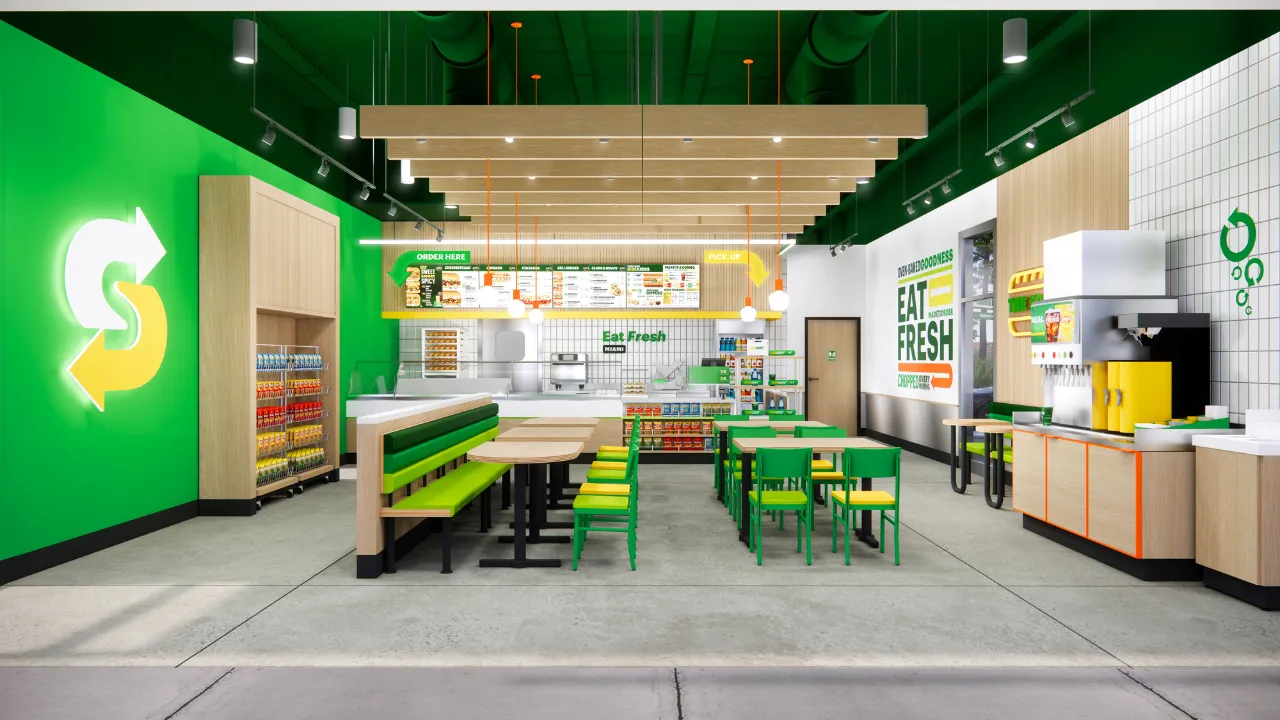
What Fresh Forward 2.0 signals
Fresh Forward 2.0 is the next iteration of Subway’s restaurant design programme, updating the look and the operational layout of the store rather than simply changing the signage. A global rollout means the same standard reaches thousands of locations, and each of those locations is an independent business that has to fund and schedule the work.
Design refreshes of this kind usually touch the service line, the customer-facing counter, seating, lighting, menu boards and finishes. Where the layout of the make line changes, the project stops being cosmetic and starts involving equipment, plumbing and electrical.
Why a global standard is harder than it looks
A single design applied across thousands of buildings meets thousands of different realities: different footprints, different landlords, different local codes. The spec assumes a typical store. Your store is not typical, and neither is anyone else’s.
What to plan for
- Confirm which elements of the standard are mandatory and which are optional in your market
- Check whether the new layout changes your equipment schedule, because that drives plumbing and electrical
- Get landlord consent early if the work touches the storefront, the HVAC or anything structural
- Assume permit and inspection time on top of build time, not inside it
- Ask whether the brand has a deadline attached to the rollout, and put it in writing
Timing is leverage
Franchisees who move early in a rollout tend to get better contractor availability and more attention from the brand’s construction team. Those who wait until a deadline is close end up competing for the same trades as every other operator in their market, at exactly the moment those trades can name their price.





.png)

